
MIDSUMMER EVE
Dreaming Of Your Lover With Nine Wild Flowers Under Your Pillow!
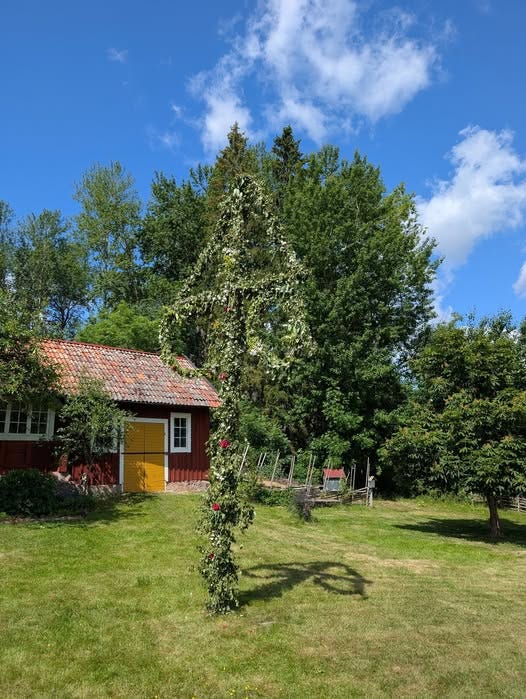
Dancing around a maypole decorated with foliage, pickled herring, boiled new potatoes with soured cream and chives, making wreaths, dreaming with flowers under your pillow, strawberry cake, schnapps and specific songs that accompany them…
Yes, we are rapidly approaching the shortest night of the year, here in Scandinavia. The astronomical summer solstice will occur on Sunday 21 June, at 10.24 Central European Time.
As always I am sending out this article one day early, so if people want to follow some of the suggestions, they there some time left to prepare and organise that! Tomorrow is a Big Day in Sweden, almost on a par with Julafton (Christmas Eve) I would say. It is a public holiday and people here engage in many traditions. (Please note that I am sending out another article on Saturday about a darker side to these celebration, connected to witch hunts).
It is often assumed that this celebration has pre-Christian origins, but this is uncertain because we have no evidence for this. Any relevant writing from before the Early Medieval Period has not been preserved (if it existed).
In the Christian church, the birthday of John the Baptist has been celebrated on June 24th, since about the year 300 CE. This feast day made it to Scandinavia around the year 1000 (when the Nordic Region became Christianized).
The word “midsummer” originally referred to a period starting one month later, around July 20-22. In the Icelandic sources this period is connected to the practice of Blót (offering ceremonies). The oral tradition (or folk mouth) eventually moved the word “midsummer” from late July to the birthday of John the Baptist. I am guessing this was because the temperatures in July, here in Scandinavia, are generally higher in July. (This year, 2026, we had night frost up to the last week of May!)
Here in Sweden people form a circle and dance around the Maypole, while singing all the traditional songs. VIDEO
It is believed that the Maypole (Maibaum in German) was introduced in Sweden from Germany around the 14th century. The word “May” in that word does not refer to the month of May. It is derived from the old verb maja, which means to cover or decorate with foliage and flowers. (I associate Rune EOH or Eihwaz with the Maypole, because it represents the axis mundi - world axis or spine - made manifest, visible!)
Wearing a blomsterkrans (wreath) in your hair is a bit of a “must” for children and women!
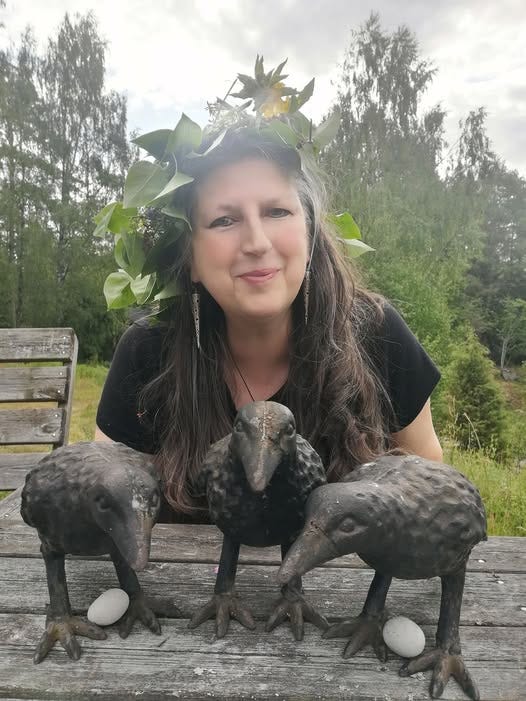
MY “BLOMSTERKRANS” IN 2025 (It was more foliage than flowers!)
A liberal supply of alcohol is deeply wired into these customs. In the year 1999 we once hosted a Midsummer Party in London (UK). I had just discovered that I was pregnant with our first son. From that determinedly sober perspective I was aghast at the amount of alcohol people were knocking back.
Here in Sweden these celebrations (and same thing happens on New Year’s Eve and Walpurgisnight or Valborgsmassoafton) tend to spin out of control, so the police are out in full force. The morning after Valborgsmässoafton 2026, the Stockholm Police ran an update (on their social media page) about exactly how many teenagers had been arrested (for disorderly conduct) and how many parents had been called out of bed to collect their offspring from a police station… As Midsommarafton is also the weekend that the school year ends and many families start their summer holidays, it i one of most traffic-accident-prone weekends of the year too.
Midsummer Eve is always celebrated on a Friday, no matter what the astronomical date for the summer solstice is. The celebrations happen outdoors, so there is a lot of talk about the weather, in the run-up to the Big Day. And yes, it often rains…
Many fun activities are organised on Midsummer Eve, such as “sack races” and a “lucky dip” or raffle.
In the countryside Midsummer Eve (or Midsummer Night) was seen as one of the most magical nights of the year. Otherworld beings were out and about and eager to attend the celebrations as well. The Veil between the worlds thins and supernatural occurrences are common.
It was believed that healing herbs were extra powerful this night, to it was a good time to harvest them. People also made posies from midsummer flowers, to retain (a bit of) the spirit of Midsommar during the rest of the year. I guess also to remind themselves that even an eight-month-winter does not last forever?)
Those posies, or small bouquets, could be added to the bath water on Christmas Eve, to help people stay healthy and vibrant. They were also used as a universal medicine when animals became sick. Generally speaking plants picked on Midsummer Eve are believed to have healing properties.
Rural people also made a Midsommarkvast (essentially a Midsummer Besom) from birch tree twigs, which were used in the steaming hot sauna. They could also be used to sweep clean (or energetically cleanse/purify) the house. It was used for the duration of the summer.
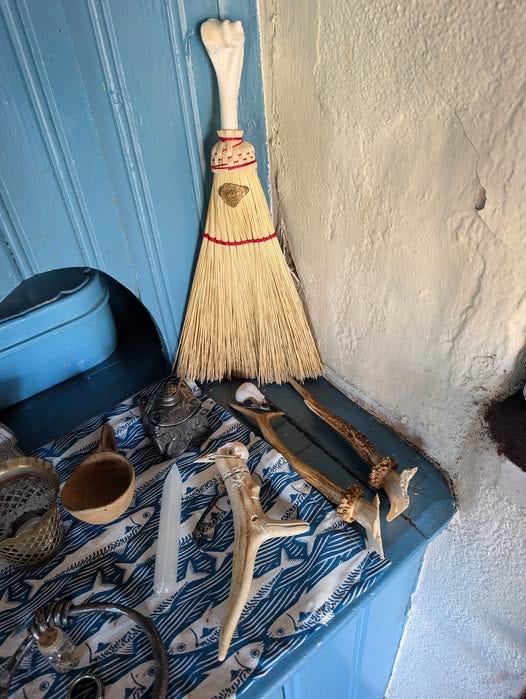
MY BESOM! A gift from a Canadian student (but NOT a “Midsommarkvast”!)
Another magical ingredient was the Midsummer dew. The idea was to walk barefoot in the dew, to stay strong and healthy during the year to come. The dew was also collected to cure diseases, and for brewing beer and making bread rise (because it carries wild yeast cells from the surrounding vegetation!)
Continuing with the theme of water (Rune LAGU or Laguz!) people would also visit certain wells and drink the water to gain strength and maintain good health.
There is a lot of folklore about the gift of sight and foretelling the future, on this day. The same goes for all major feast days. People would attempt to “see” who was going to get married in the year to come, who was going to die and what the harvest (Rune JARA or Jera) was going to be like.
I have written about “årsgång“ before. Midsummer Eve is another good time to perform such an omen walk. More information and a full set of instructions can be found in a previous post (just adapt them to summer season): ARSGANG. (A concept I also relate to Rune JARA or Jera, because the name of this rune refers to both the harvest and a one year cycle!)
Another option was sitting out in silence by a jordfaststen (a large rock that is firmly embedded in the earth and impossible to move without specialist equipment). The general idea is not unlike what some Native American peoples call a “vision quest”: the idea is to receive either a vision or an auditory message from spirit.
People believed that it was possible to see the funeral procession pass, of a person destined to die in the year to come, or even to hear the grass grow (like Norse god Heimdallr!) as an indication of a good harvest.
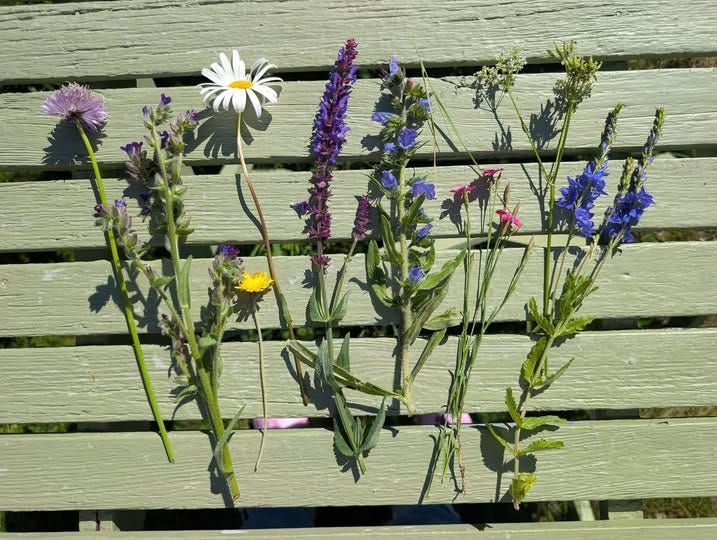
PICKING NINE FLOWERS
Unsurprisingly forms of love divination are the most popular of all: the most famous one was to pick seven or nine different types of flowers and put them under your pillow, so you would dream of the person you will marry in the future. Odd numbers carried a magic of their own, so it was important not to pick an even number of flowers. Those flowers also need to be picked in total silence. Break the silence and you break the magic!
Other magical ingredients or actions (which could be added) was performing everyday actions in the nude, or in reverse, our counter-clockwise, or while observing yourself in a mirror.
Some prescriptions suggest that, to really do things properly, you need to climb (or jump across!) over as many fences as the number of flowers you pick. (Stay safe please!)
Yet another popular divination method was to eat something extremely salty (such as salted herring) and to make (so called) drömgröt or drömpannkakor (dream porridge or dream pancakes) from water, flour and an overdose of salt. After doing that you go to bed, without drinking anything. Your future lover or spouse would then reveal themselves in a dream and offer you some kind of drink. And the type of drink he or she offers offers even more divination because it will tell you whether your life together will be rich or poor!
If that doesn’t speak to you, go could go out and look into a (so called) midsommarkälla (midsummer spring, a spring connected to scrying and divination work on sacred days). Ideally the face of your future spouse (rather than your own mirror image) will look at back at you from the surface of the water…
Springs were generally good places to visit anyway, on any day full of Big Magic, to enhance your fertility, if you so wish.
Oh and before I forget: Midsummer is also a great time to go treasure hunting because on this day enchanted treasures will magically rise from the ground and become visible to human eyes. But remember to do this in total silence, or else the treasure will disappear back into the Earth and never be seen again.
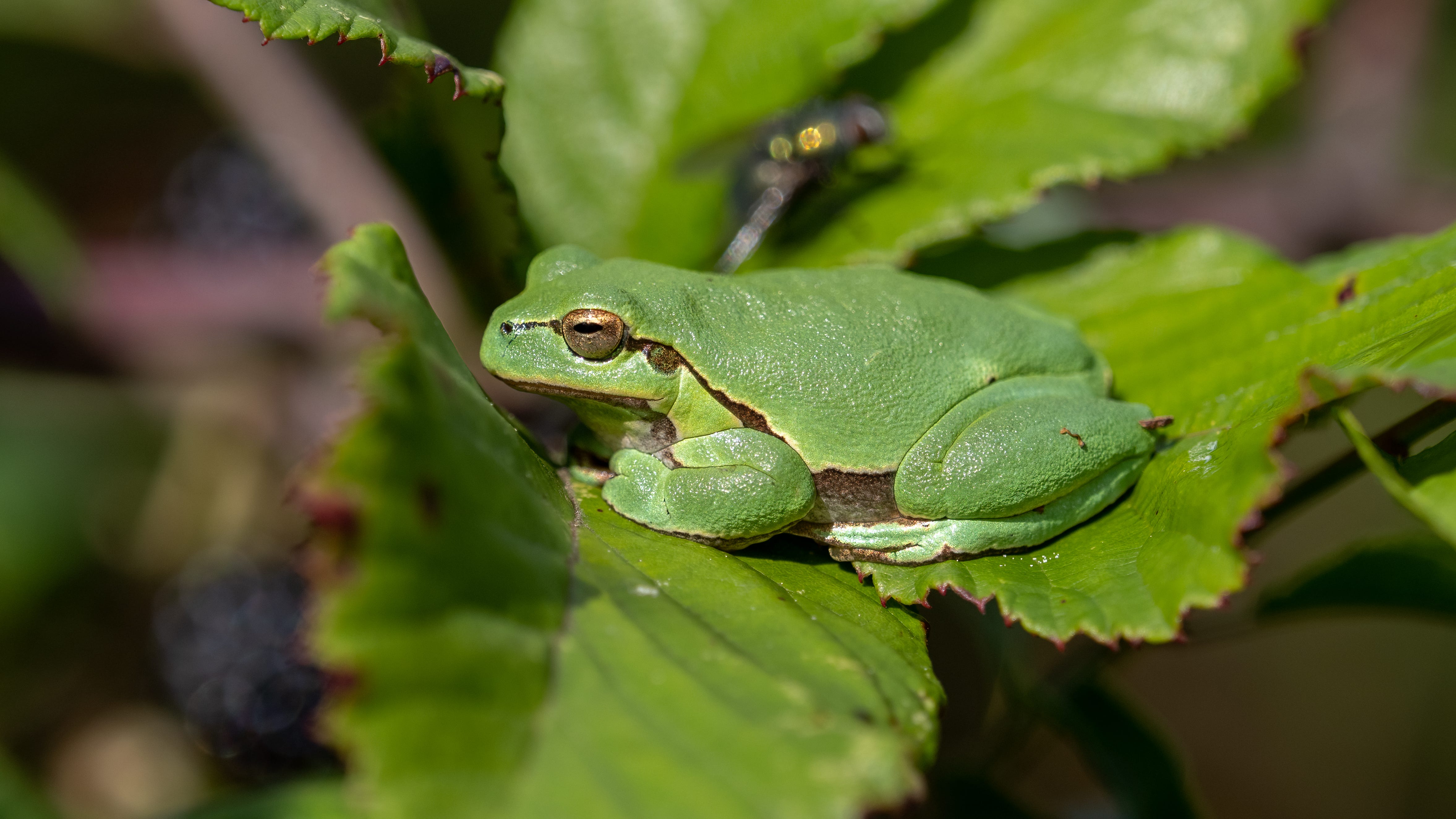
Tree frog, photograph by Stephan Berendsen
The European tree frog is one of the most remarkable frogs found in the Netherlands. With its bright green color, large adhesive toe pads, and excellent climbing skills, it feels right at home among reeds, shrubs, and low vegetation. Although it grows to only a few centimeters in length, it easily catches the eye when basking in the sun. However, these tiny acrobats are not easy to find. Their excellent camouflage and secretive nature allow them to blend perfectly into their surroundings, making every sighting a special experience. -Stephan Berendsen
Last but not least, you must sing a song about small frogs on Midsummer Eve!
Små Grodorna
Små grodorna,
små grodorna
är lustiga att se.
Små grodorna,
små grodorna
är lustiga att se.
Ej öron, ej öron,
ej svansar hava de.
Ej öron, ej öron,
ej svansar hava de.
Koack, ack, ack
Koack, ack, ack
Koack, ack, ack, ack, aa.
Koack, ack, ack
Koack, ack, ack
Koack, ack, ack, ack, aa.
Small frogs 2x// are funny to look at. Repeat twice
No ears, no ears// no tails have they. Repeat twice.
Quo-ack ack ack… etc. (Replace all words in the song with “quack”!)
English speakers might be surprised to hear that frogs say “quack” in Swedish, because in English that is reserved for ducks. Frogs say “ribbit ribbit!” in English, but in Dutch frogs also say “kwak”. Maybe there are local animal dialects? : )
Please note that the website of Nordiska Museet (The Nordic Museum) in Stockholm was the source for most of this information: SOURCE. Another fabulous source of information (for those of you who can read Swedish) is ISOF: Institutet för språk och folkminnen (The Institute for language and folklore/traditional beliefs). LINK
I try to send out two essays a week, but this sometimes fails due to travel, international teaching commitments and family care responsibilities (our family lives with Alzheimer’s and I have written several posts about that). If you would like to see regular posts about about Nordic spirituality and my life as a Forest Witch (and of course short videos of all the wildlife here!), please follow me on Instagram or Facebook, thank you! (And please check out my upcoming book about the runes, see the picture below).
As my audience here grows daily I need to add the following statement: ©I own the copyright to all my own words and images, as they appear here on Substack (or anywhere else). You can only reproduce this material (full or in part) elsewhere, if you give me full credit as the author and or artist. Most of you already knew this! Thank you!
Imelda Almqvist, Forest House and Forest School, Sweden
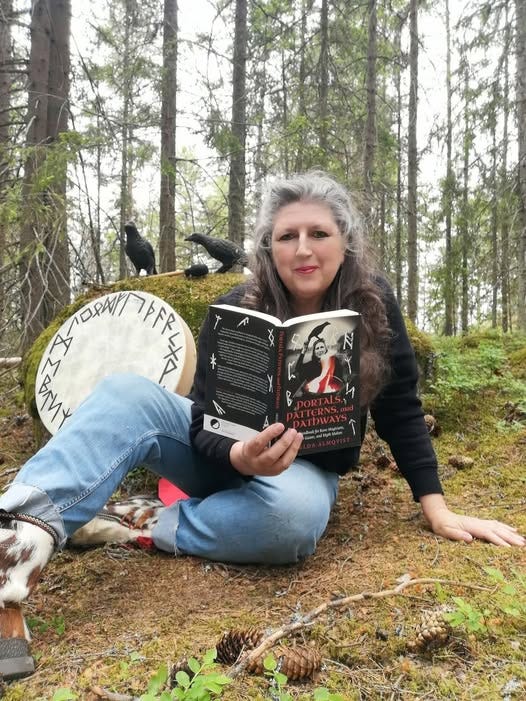
BIO FOR IMELDA ALMQVIST
Imelda Almqvist is an international teacher of Sacred Art and Seiðr/Old Norse Traditions (the ancestral wisdom teachings of Northern Europe). So far she has written four non-fiction books and two picture books for children. Natural Born Shamans: A Spiritual Toolkit for Life (Using shamanism creatively with young people of all ages) in 2016, Sacred Art: A Hollow Bone for Spirit (Where Art Meets Shamanism) in 2019, Medicine of the Imagination - Dwelling in Possibility (an impassioned plea for fearless imagination) in 2020 and North Sea Water In My Veins (The Pre-Christian spirituality of the Low Countries) was published in June 2022. Her latest book: Portals, Patterns and Pathways: A Handbook for Rune Magicians, Star Gazers and Myth Makers was published (in the UK on May 26th and just came out in the US and Canada).
The Green Bear is a series of picture book for children, aged 3 – 8 years. The stories and vibrant artwork, set in Scandinavia, invite children to explore enchanting parallel worlds and to keep their sense of magic alive as they grow up.
Imelda appears in a TV program, titled Ice Age Shaman, made for the Smithsonian Museum, in the series Mystic Britain, talking about Mesolithic arctic deer shamanism.
Imelda’s eagerly awaited book about the runes (the title is Portals, Patterns and Pathways, a Handbook for Rune Magicians, Star Gazers and Myth Makers) will be published by Collective Ink on 26 May 2026). She is currently working on a book about Inuit deities and mythology.
Imelda prefers being contacted by email. She only rarely checks (or responds) to DM’s on social media platforms.
Please note that Imelda’s on-line school called Pregnant Hag Teachings went off-line on 3 September 2025, due to a quadruple raise in fees imposed by the hosting platform. PUBLIC ANNOUNCEMENT AND FULL EXPLANATION
Website:
http://www.shaman-healer-painter.co.uk/
YouTube Channel: youtube.com/user/imeldaalmqvist
Facebook: https://www.facebook.com/imelda.almqvist/
Instagram: https://www.instagram.com/almqvistimelda/
Useful info, thank you!